
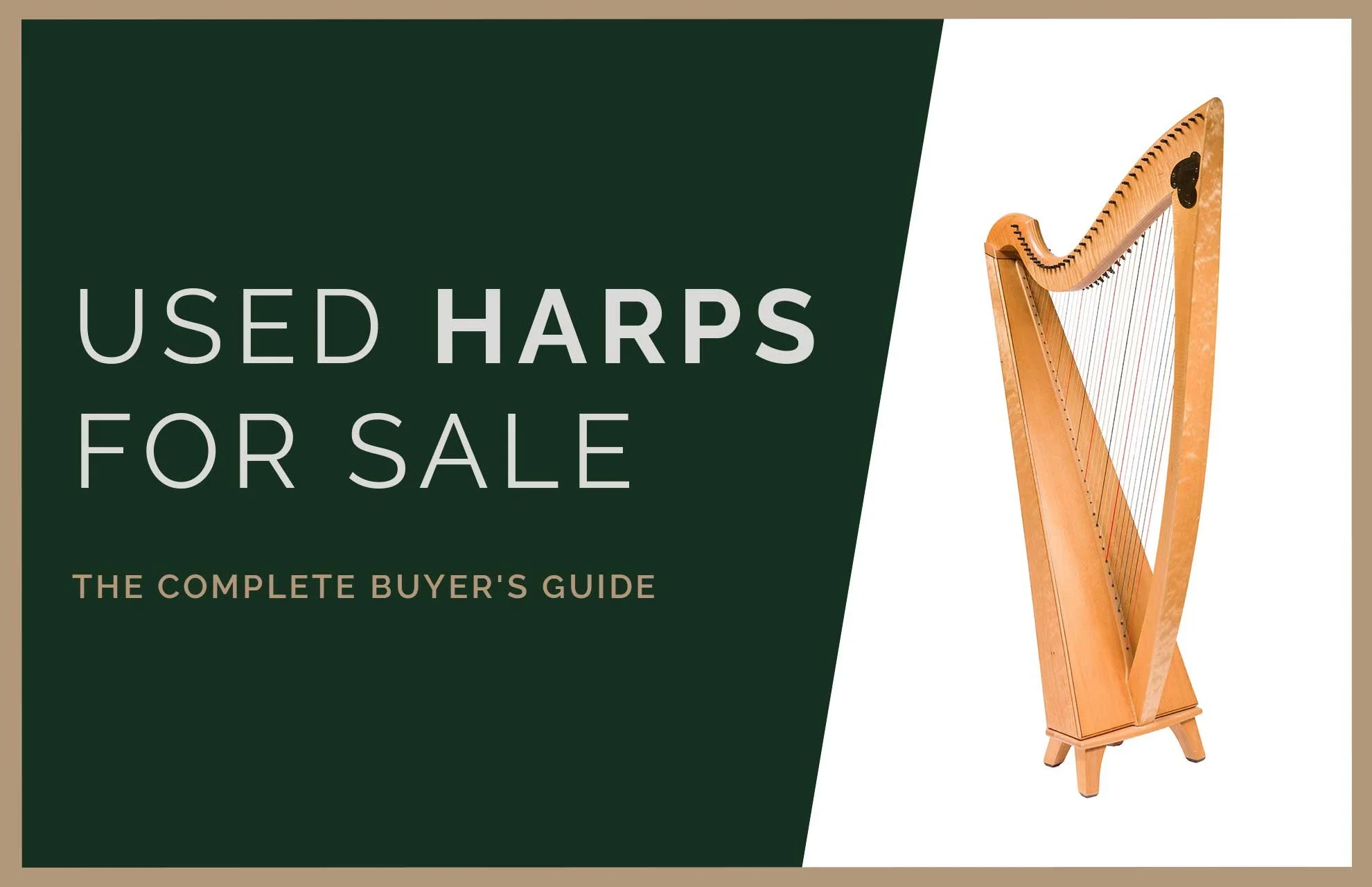
Used Harps for Sale
The Complete Buyer's Guide
The used harp market offers an excellent opportunity to acquire a quality instrument at a significantly reduced price compared to buying new. However, purchasing a pre-owned harp requires careful evaluation, knowledge of potential issues, and understanding of what constitutes fair value. This comprehensive guide will help you navigate the used harp marketplace with confidence, whether you're a first-time buyer or an experienced player looking to upgrade.
Why Buy a Used Harp?
Before diving into the how-to, it's worth understanding the compelling advantages of purchasing pre-owned instruments.
Significant Cost Savings
Used harps typically sell for 30 to 50 percent less than their original retail price, depending on age, condition, and market demand. A lever harp that retailed for $5,000 new might sell for $2,500 to $3,500 used. This price reduction can mean the difference between affording a beginner-level instrument or a professional-quality harp that will serve you for decades.
The savings are even more dramatic with pedal harps, where used instruments can cost $10,000 to $20,000 less than new equivalents. For students, semi-professional players, or anyone on a budget, the used market opens doors to instruments that might otherwise be financially out of reach.
Access to Discontinued Models
Harp manufacturers occasionally discontinue models, but these instruments often remain excellent choices. The used market becomes the only way to acquire certain beloved designs. Some players specifically seek out older instruments from particular eras, believing they possess superior tonal qualities or construction compared to current production models.
Broken-In Sound
Many musicians believe that harps, like other acoustic instruments, improve with age as the wood continues to season and resonate. A well-maintained 10 or 20-year-old harp may actually sound richer and more mature than a brand-new instrument. The breaking-in period has already occurred, so you immediately benefit from the instrument's full tonal potential.
Where to Find Used Harps for Sale
Knowing where to look dramatically affects both selection and the likelihood of finding a quality instrument.
Harp Dealers and Specialty Shops
Many established harp dealers maintain an inventory of consignment instruments or trade-ins. Buying from a reputable dealer offers several advantages: instruments have typically been inspected and serviced, you can often try the harp before purchasing, the dealer can provide guidance on value and condition, and sometimes limited warranties or return periods are available.
Dealers also understand fair market pricing and can help you navigate negotiations. While their prices might be slightly higher than private sales, the added security and support often justify the difference.
Online Marketplaces and Forums
Websites dedicated to musical instruments, harp-specific forums, and general classified sites all feature used harps. These platforms often offer the best prices since you're buying directly from the seller without dealer markup. However, they also carry the highest risk. Remote purchases require extreme diligence, detailed questioning, and preferably inspection by a local harp technician before finalizing the transaction.
Harp Festivals and Conferences
Annual harp gatherings often feature instrument sales areas where players sell their harps. These events provide excellent opportunities to try multiple instruments, compare models side-by-side, and meet sellers face-to-face. The concentrated marketplace creates competitive pricing while allowing thorough evaluation before purchase.
Music Schools and Teachers
Harp teachers and music programs sometimes know of instruments for sale through their networks. Students upgrading to new instruments, teachers thinning their collections, or schools replacing rental inventory all create opportunities. These sources often provide reliable information about the instrument's history and condition.
Evaluating a Used Harp: What to Inspect
Thorough evaluation separates wise purchases from expensive mistakes. Whether inspecting in person or reviewing photos and information remotely, pay attention to these critical areas.
Structural Integrity
Examine the soundboard carefully for cracks, which appear as fine lines running along the wood grain. Small hairline cracks might not affect playability, but significant cracking indicates structural problems that could worsen. Check where the neck joins the body and where the pillar meets both – these high-stress joints should show no separation or cracking.
Look at the neck from directly above to ensure it's straight without warping or twisting. Any deviation from straight indicates serious structural issues. Press gently on different parts of the soundboard while listening for rattles or buzzes that suggest loose bracing or detached components.
Mechanical Components
For lever harps, test every lever by flipping it up and down. Each should move smoothly, engage cleanly without sticking, and hold position securely. The string should produce a clear pitch change exactly one half-step when engaged. Levers that bind, slip, or produce unclear pitches need adjustment or replacement.
Pedal harps require even more careful mechanical inspection. Test all seven pedals through their full range of motion. Each should move smoothly through all three positions, hold securely in each notch, and produce clean pitch changes. Sticky, noisy, or sloppy pedal action indicates needed regulation or repair, which can be expensive. Check the condition of pedal felts and examine the action plates for excessive wear.
Finish and Cosmetic Condition
While purely cosmetic issues don't affect sound or playability, they do impact value and your enjoyment of the instrument. Normal wear like minor scratches or dings is expected and acceptable on older instruments. However, extensive finish damage, water stains, or poorly executed repairs suggest the harp wasn't properly cared for and might harbor hidden problems.
Look for signs of professional refinishing work, which can actually enhance value if done properly. Amateur refinishing attempts often create more problems than they solve.
Sound Quality
Play every string across the entire range. Listen for consistent tone quality, good sustain, and even volume. Dead spots, buzzing strings, or dramatic volume differences between registers might indicate structural issues or setup problems. While minor inconsistencies can often be corrected, significant tonal problems suggest deeper issues.
If you lack experience evaluating harp sound, bring an experienced player or teacher to help assess the instrument. Tonal quality is somewhat subjective, but obvious problems are usually recognizable even to beginners.
Questions to Ask the Seller
Gathering detailed information helps you make informed decisions and avoid surprises. Don't hesitate to ask comprehensive questions – legitimate sellers understand and respect thorough buyers.
History and Provenance
Ask how old the harp is, how many previous owners it's had, and why the current owner is selling. Inquire about the storage environment – harps kept in climate-controlled homes fare better than those exposed to extreme temperatures or humidity fluctuations. Learn whether the instrument was used for student practice, professional performance, or occasional playing, as usage intensity affects wear.
Maintenance and Repairs
Request complete records of professional regulation, repairs, and modifications. When was the last regulation performed and by whom? Have any structural repairs been made? Has the instrument been refinished? Are all components original, or have parts been replaced?
Lack of maintenance records isn't necessarily disqualifying, especially for older instruments, but it means you should budget for immediate professional servicing to establish the harp's current condition and address any issues.
Included Accessories
Clarify what's included in the sale price. Essential items include a tuning key and ideally a padded cover or case. Some sellers also include spare strings, a tuner, a bench, or music stands. While accessories aren't deal-breakers, knowing what's included helps you budget for anything you'll need to purchase separately.
Determining Fair Market Value
Understanding what constitutes a reasonable price protects you from overpaying while helping you recognize genuine bargains.
Research Comparable Sales
Search online marketplaces and forums for recently sold harps of the same model and similar condition. Note that asking prices often differ significantly from actual selling prices – focus on completed sales when possible. Contact dealers about current market values for the model you're considering.
Factor in Condition and Age
A five-year-old harp in excellent condition with complete maintenance records justifies pricing near 60 to 70 percent of current new retail. A 20-year-old instrument with some wear might fairly price at 40 to 50 percent. Harps requiring significant repairs or regulation should be priced considerably lower to account for those upcoming expenses.
Brand reputation affects value retention. Well-known manufacturers like Lyon & Healy, Salvi, and Dusty Strings maintain value better than lesser-known brands. Limited production or discontinued models sometimes command premium prices if they're particularly desirable.
Negotiating and Closing the Deal
Once you've found a promising instrument, thoughtful negotiation and careful transaction management protect your interests.
Making an Offer
If your evaluation reveals issues requiring professional attention, factor repair costs into your offer. Presenting evidence of needed work justifies offering below asking price. Even on instruments in good condition, sellers often expect some negotiation. Offering 10 to 15 percent below asking price is generally reasonable if you can justify your offer with market research.
Be respectful in negotiations. Lowball offers offend sellers and damage rapport. If your research suggests an asking price is fair, acknowledge that while still attempting to negotiate modest savings or the inclusion of accessories.
Payment and Documentation
For remote purchases, use payment methods that offer buyer protection. In-person transactions might use cash or certified checks. Always request a bill of sale documenting the transaction, including the instrument's serial number, purchase price, date, and both parties' contact information. This documentation proves ownership and helps with insurance claims if needed.
Transportation Considerations
Budget for proper transportation. Harps require careful handling during transport. If the seller is local, arrange safe pickup with appropriate vehicle and padding. For distance purchases, professional musical instrument shipping services specialize in harp transport, though costs can be substantial. Factor shipping expenses into your total budget when evaluating purchase feasibility.
After Purchase: Next Steps
Once you've acquired your used harp, several immediate actions ensure it's in optimal playing condition.
Professional Inspection and Regulation
Schedule an appointment with a qualified harp technician for complete evaluation and regulation. Even if the harp seems fine, professional setup ensures everything is properly adjusted and identifies potential future issues. This investment provides peace of mind and establishes a baseline for future maintenance.
Insurance
Contact your homeowners or renters insurance provider to add your harp to your policy. Musical instrument coverage is typically affordable and protects your investment against theft, damage, or loss. Maintain documentation including photos, the bill of sale, and any appraisals for insurance purposes.
When Used Might Not Be the Best Choice
While the used market offers excellent value, certain situations favor purchasing new instruments instead.
Absolute beginners uncertain about long-term commitment might prefer new instruments with warranties and return periods. If you require specific features, customization, or the latest technology, new instruments provide more options. When the used market prices don't offer sufficient savings compared to new instruments, especially with available financing, new harps become more attractive.
Speaking of financing, remember that many dealers offer payment plans for new instruments over $1,500, making them affordable through manageable monthly payments. Some dealers even offer rent-to-own programs where monthly payments build equity toward eventual ownership. These options can make a new harp surprisingly accessible while providing warranty protection and dealer support.
Final Thoughts
The used harp market presents wonderful opportunities for acquiring quality instruments at reduced prices. Success requires patience, thorough research, careful evaluation, and realistic expectations. Not every used harp represents a good value, but with diligence and knowledge, you can find an instrument that serves you beautifully for years at a price that respects your budget.
Whether you ultimately choose a used or new instrument, the goal remains the same: finding a harp that inspires you to play, fits your musical goals, and brings you joy. Happy harp hunting!
